If we let certain plants go to seed after flowering, their dropped seeds may sprout later on, or self-sow. The most likely plants for self-sowing are annuals and short-lived perennials that a) produce lots of seeds, and b) have seeds that aren’t too fussy about their germination conditions.
Finding self-sown seedlings can feel like such a bonus – free plants, with little to no effort on your part. But… there are a few tasks needed in order to fully enjoy and take advantage of their presence in your garden:
Identifying self-sown seedlings is a fun and useful gardening skill. It takes time to learn to recognize what plants have sprouted, and sometimes they really don’t make it easy. Case in point: one of the seedlings in the picture below is statice, and one is a dandelion…

Controlling how many self-sown seedlings you get can be done in a few ways. Some plants produce sooo many seeds, which may lead to way more seedlings the next year than you want, so you can remove or cut off the faded flowers on some of the plants after they flower but before they go to seed. For the plants that you do let remain in the garden, scattering their seeds where you want them to land is another method for influencing the results.
Even if you take these measures during the prior growing season, thinning self-sown seedlings after they sprout is sometimes necessary, because you may end up with several seedlings in a clump, too close to each other for any of them to grow well. To minimize disturbance of the seedlings that you do want to keep, it works best to cut off the extras at the soil level with sharp shears, rather than pulling them out.
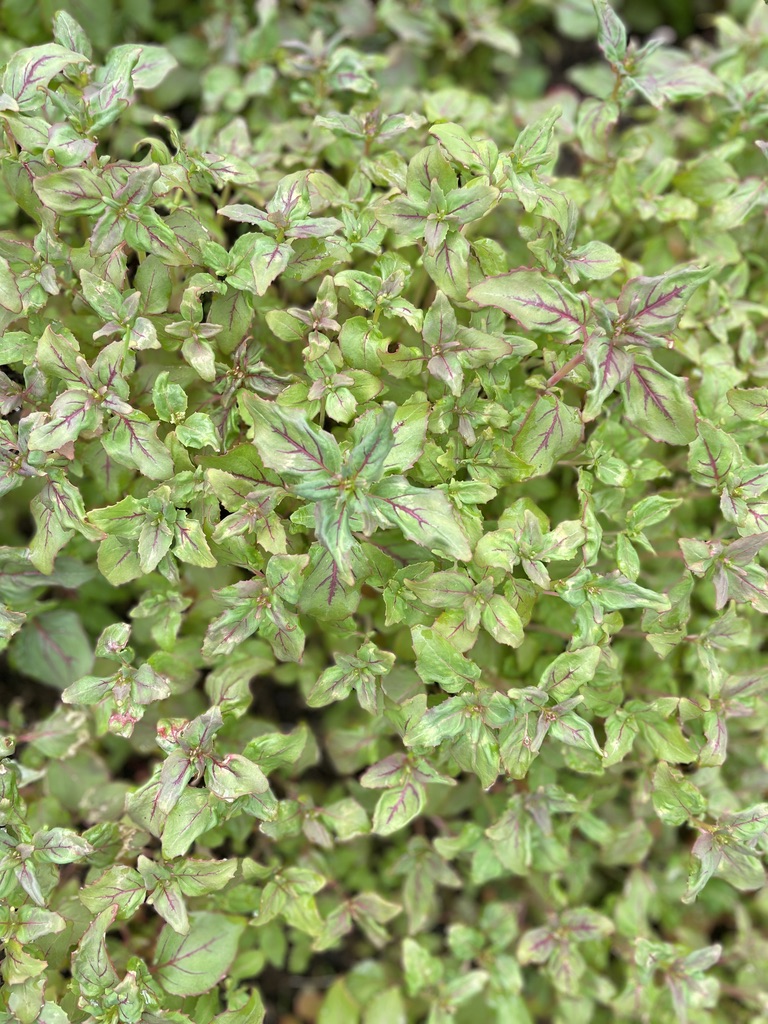
If you’re not hoping to grow big, strong plants with lots of blooms for cutting, you can skip these steps for preventing or thinning extra seedlings. You’ll just end up with somewhat wimpier plants all crowded together, like the photo at the top of this page, of an area where I let all of last year’s clarkia go to seed. 🙂
Another method for making the most of your self-sown seedlings is transplanting them when they sprout in a spot where you don’t want them to be – or when you’d like this type of plant in a new area but you didn’t scatter seed there the prior growing season. The ideal time for moving seedlings is when the weather is mild and not sunny – late in the afternoon works well – and remember to provide plenty of water as they acclimate to their new spot.
Self-sowers that don’t mind being moved where you want them are some of the easiest to garden with. Here are a few of my favorites:
- scabiosa (Scabiosa atropurpurea)
- elegant clarkia (Clarkia unguiculata)
- calendula (Calendula officinalis)
These self-sowers are a bit fussier about being moved, but have still done well after careful transplanting:
- bupleurum (Bupleurum griffithii)
- daucus (Daucus carota ‘Dara’)
- honeywort (Cerinthe major)
Self-sowers that don’t respond well to root disturbance are not as easy to garden with, because they may only be able to grow where they’ve already sprouted. But here are several that I find worth it to keep around even so:
- borage (Borago officinalis)
- larkspur (Consolida ajacis)
- nigella (Nigella damascena)
 Local flowers from St. Helena, CA