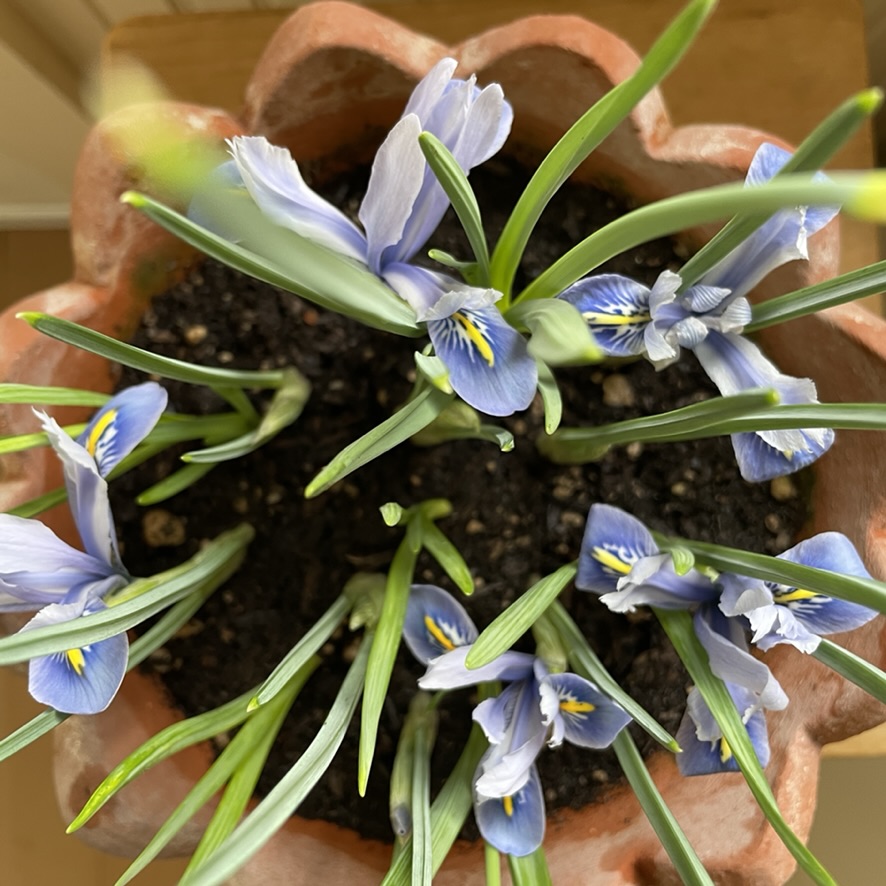
As you savor autumn’s crisp, sunny days and bright, cheerful pumpkins and chrysanthemums, consider sparing a thought for your future winter self—the lethargic, bedraggled one who doesn’t want to get out of bed in the morning and longs for warmth, light, and a bit of color.
If you tuck certain bulbs in your fridge during the fall, they can be convinced to bloom early and reward you with much-desired beauty and scent from mid to late winter. “Forcing” these bulbs means chilling them in a dark spot starting in the fall, to replicate the winter conditions they require to make roots and then bloom in spring. By flipping the calendar pages forward and starting to chill them in September or October, you prepare them for the illusion of a spring awakening inside your house, when it may still be gloomy and chilly outdoors.
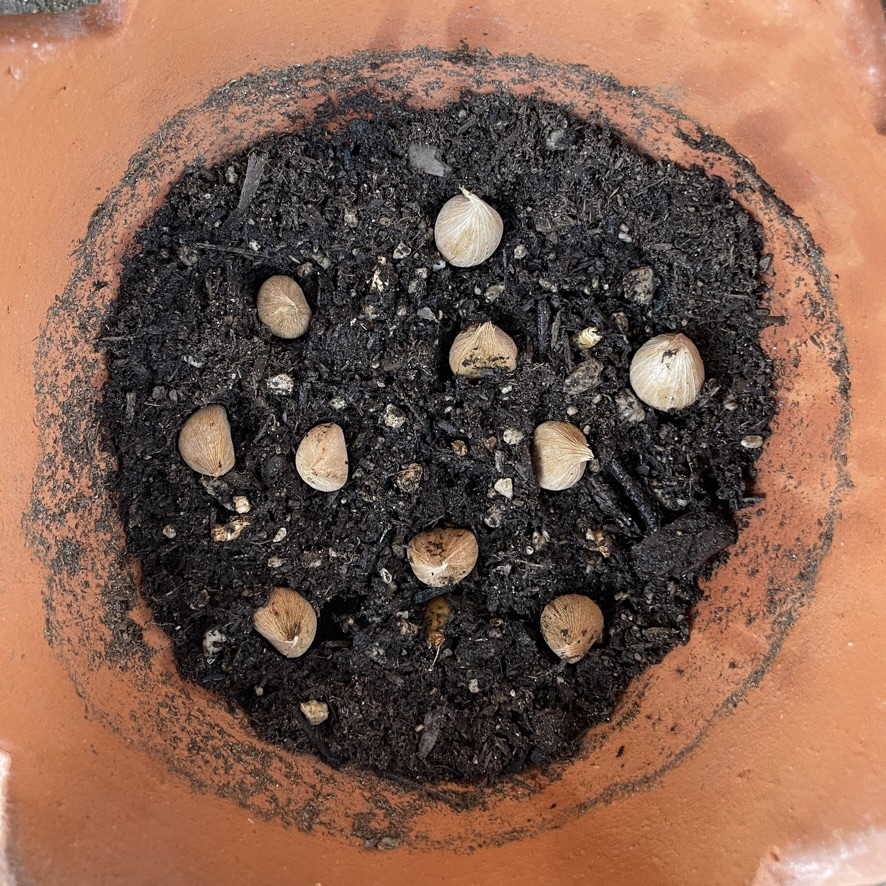
Directions for Forcing Spring-Blooming Bulbs in Pots
To get the bulbs’ winter started early, I put them in one of the produce drawers in my fridge. First, I plant them into moist potting soil in a pot with a drainage hole, with the tips of the bulbs only a little bit under the surface of the soil; the bulbs can be close together but shouldn’t touch. Then I place them in a brown grocery bag or black plastic bag with a few holes poked in it for ventilation.
One caveat before going further: you cannot keep apples in the same fridge as your bulbs, because they release ethylene, which will damage the flower that’s already developing inside each bulb. Ideally, no other fruits or veggies should be kept in the fridge, but I’ve found that as long as I don’t store anything else in the same drawer and I avoid putting apples in the fridge, they do fine.
I check the bulbs every few weeks to ensure that they’re not too moist, and to wipe away any bits of mold that may be forming on the soil’s surface. I also check that their soil hasn’t fully dried out, and water them as necessary, but I usually find that they don’t need any additional watering during their chilling period.
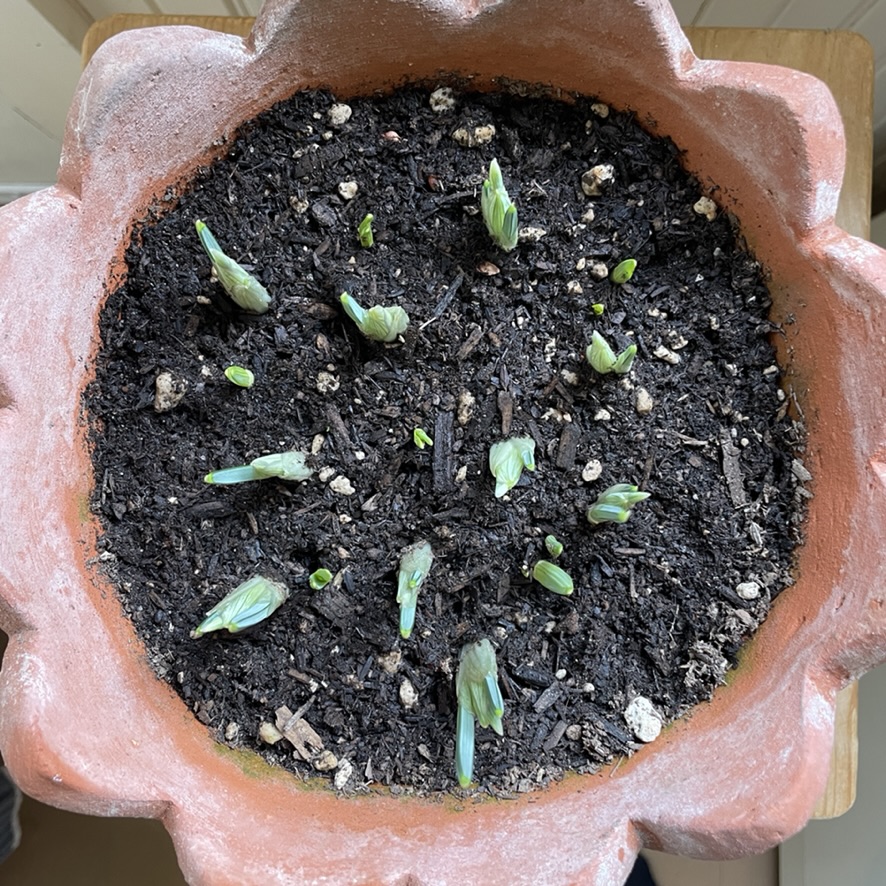
After the bulb pots get their needed length of time in the cold and dark (see the list below for some timing guidelines), they get moved to a cool spot with indirect light, until they begin to flower.
When I lived in New Jersey in Zone 7, where winter temperatures go as low as 0°F, my pots of bulbs never went outdoors, because the soil in these small containers would have become too frozen. They spent their whole chilling period in a fridge, and then went to a cool windowsill in our basement, to replicate early spring conditions.
Here in Zone 9, once it’s December and pretty cold outside, I take the pots out of the fridge and put them on our porch to finish their winter chilling time. This helps free up space sooner for actually storing produce again in our produce drawers. 🙂 When I see the bulbs start to send up stems, I bring them to our cool, unheated laundry room to continue growing in indirect light until they flower.
The final step is simply to enjoy the bulbs flowering somewhere in your house; to help their blooms last as long as possible, keep them away from heaters and bright sunlight.
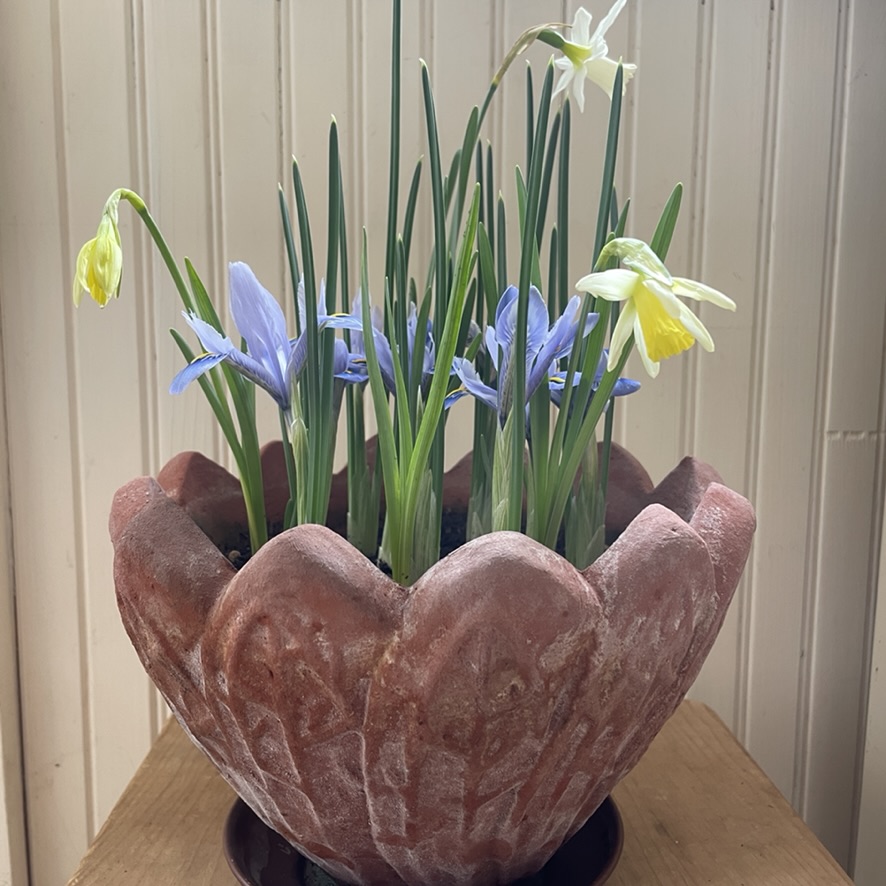
Here are some general timing guidelines for the minimum number of weeks that various bulbs need to chill before they can start sending up stems:
Crocus: 9 weeks
Dwarf Iris (Iris reticulata): 8-10 weeks
Early-blooming Narcissus (such as Elka): 10 weeks
Grape Hyacinth (Muscari armeniacum, Muscari aucheri): 10-12 weeks
Hyacinth: 10-12 weeks
Early-blooming Tulip (such as Foxtrot): 10 weeks

Directions for Forcing Spring-Blooming Bulbs in Water:
Hyacinths are a popular bulb for forcing in water, and I’ve also enjoyed forcing little grape hyacinths this way. In the fall, put the bulbs in a paper or black plastic bag with some air holes, and then let them have their needed chilling period in the fridge. When you bring them out, dip each bulb’s root end in water, and then put it in a vase with a top that can support it, making sure the water level in the vase is a little below the bulb. Place it in a cool spot with indirect light, and over the next few weeks, you’ll get to watch the roots extend down into the water as the stem begins to grow up.
Directions for Non-Hardy Bulbs:
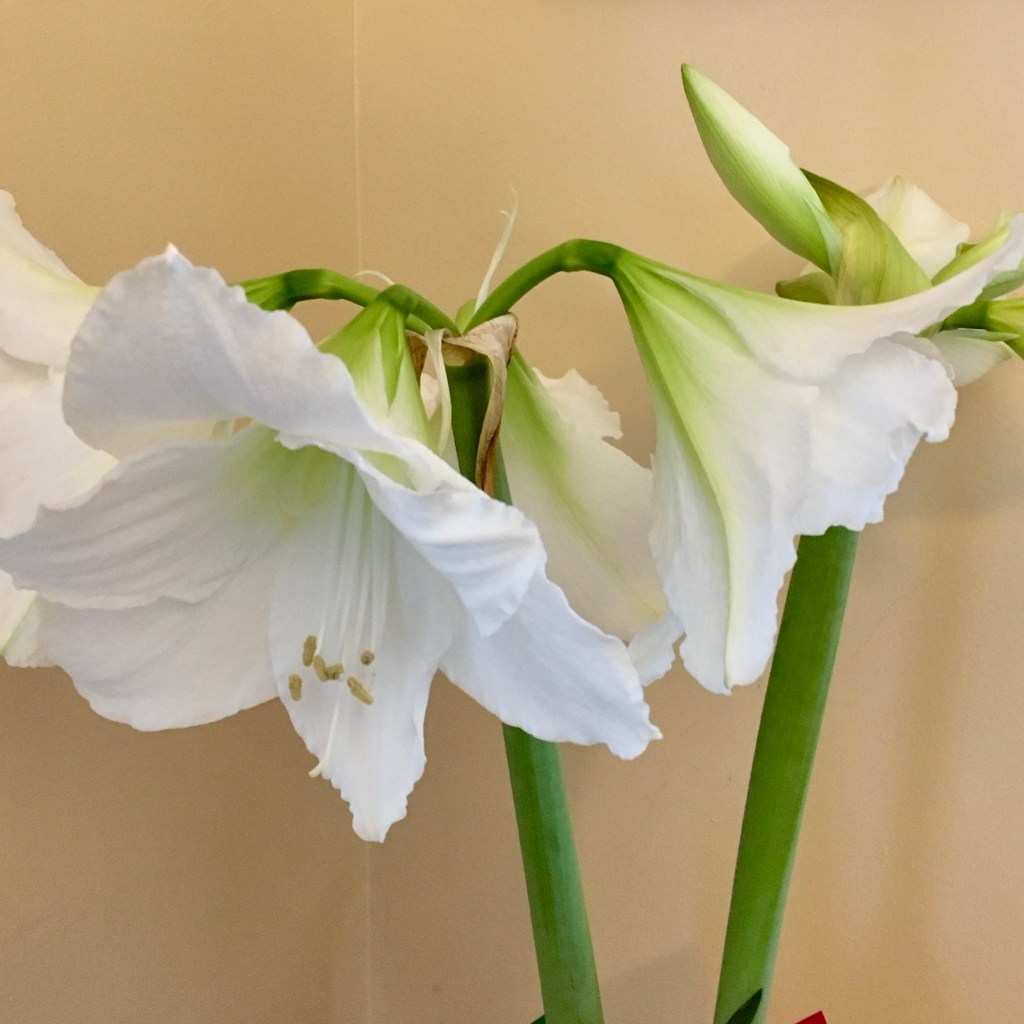
Some of the most popular bulbs for bringing into bloom indoors hail from warmer climates and don’t require any chilling, such as amaryllis and paperwhite narcissus. These can simply be potted up in fall into moist potting soil, with the tips of the bulbs above the soil, and then left in a warm, dark place like a closet to begin growing roots, until a month or so before you want them to bloom. Once they’re moved to a sunny spot they typically bloom in about 4 to 6 weeks, and are often used to bring color and beauty to the winter holiday season.
 Local flowers from St. Helena, CA