California is home to a host of native wildflowers, including several that make great cut flowers. At the end of this article are descriptions of three of my favorites.
The natural cycle of all three is to spread their seeds during the summer and fall, sprout and develop strong roots during fall and winter rains, and then bloom in spring. Growing here in Zone 9 in the Napa Valley, I mimic this sequence by sowing seeds in the fall – and by letting plants from the prior spring self-sow in certain parts of the garden.
Since they’re annuals that only carry on into the future by setting seed to become next year’s plants, they produce A LOT of seeds. If you don’t diligently remove the plants before they go to seed, you’ll probably have them in your garden year after year. I look forward to their return, but because they sometimes sprout in crowded swathes, when I want to use the plants for cut flowers, I edit out a lot of the seedlings, to make a bit of room around each plant so it can grow well and spread out.
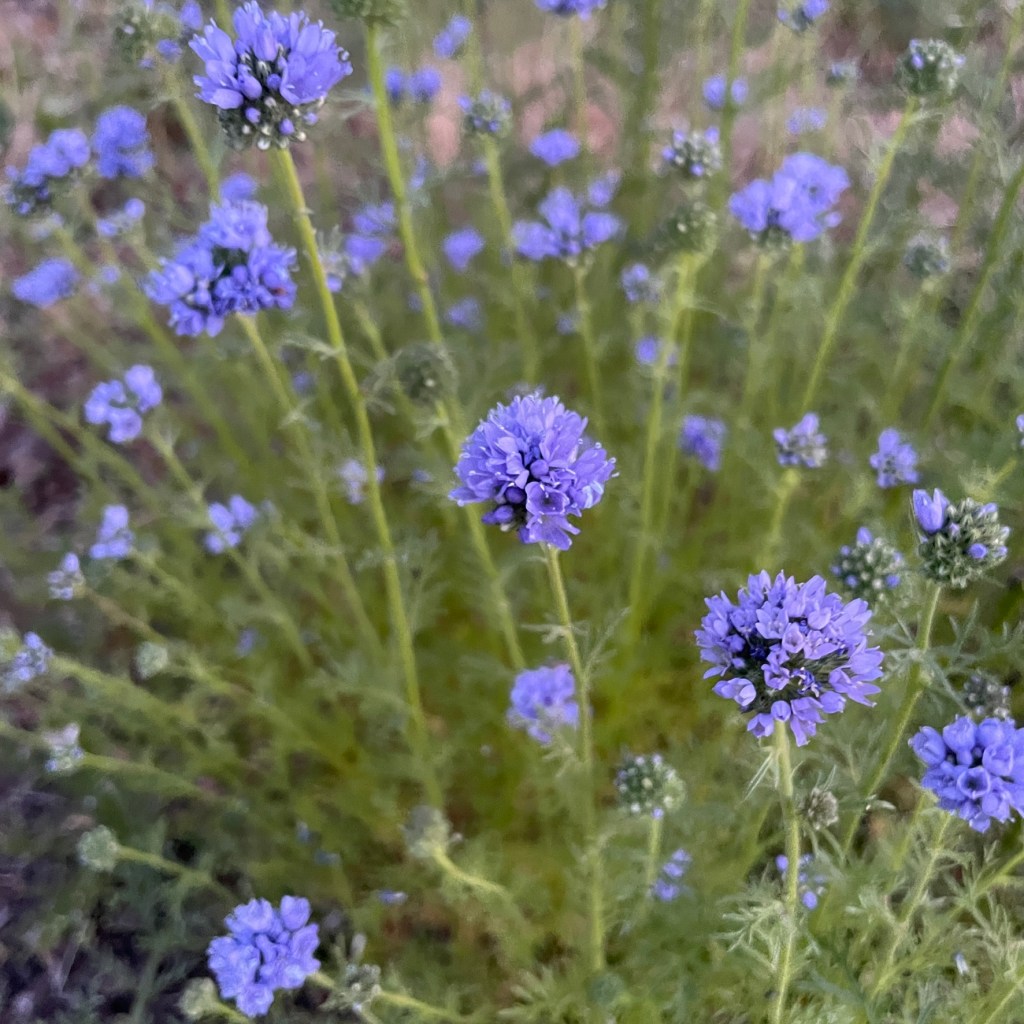
Blue Thimble Flower (Gilia capitata): This plant, also known as Globe Gilia, has flowers with a lovely lavender-blue color and a sweet scent (in image above). Their vase life is longest (about 4 to 6 days) if you cut them when only partially open. The top of the stems sometimes flops a bit after cutting, so I find that they do best in mixed bouquets with other flowers to support them. But their pretty color blends nicely with many other colors, so it’s easy to find a place for them in arrangements.
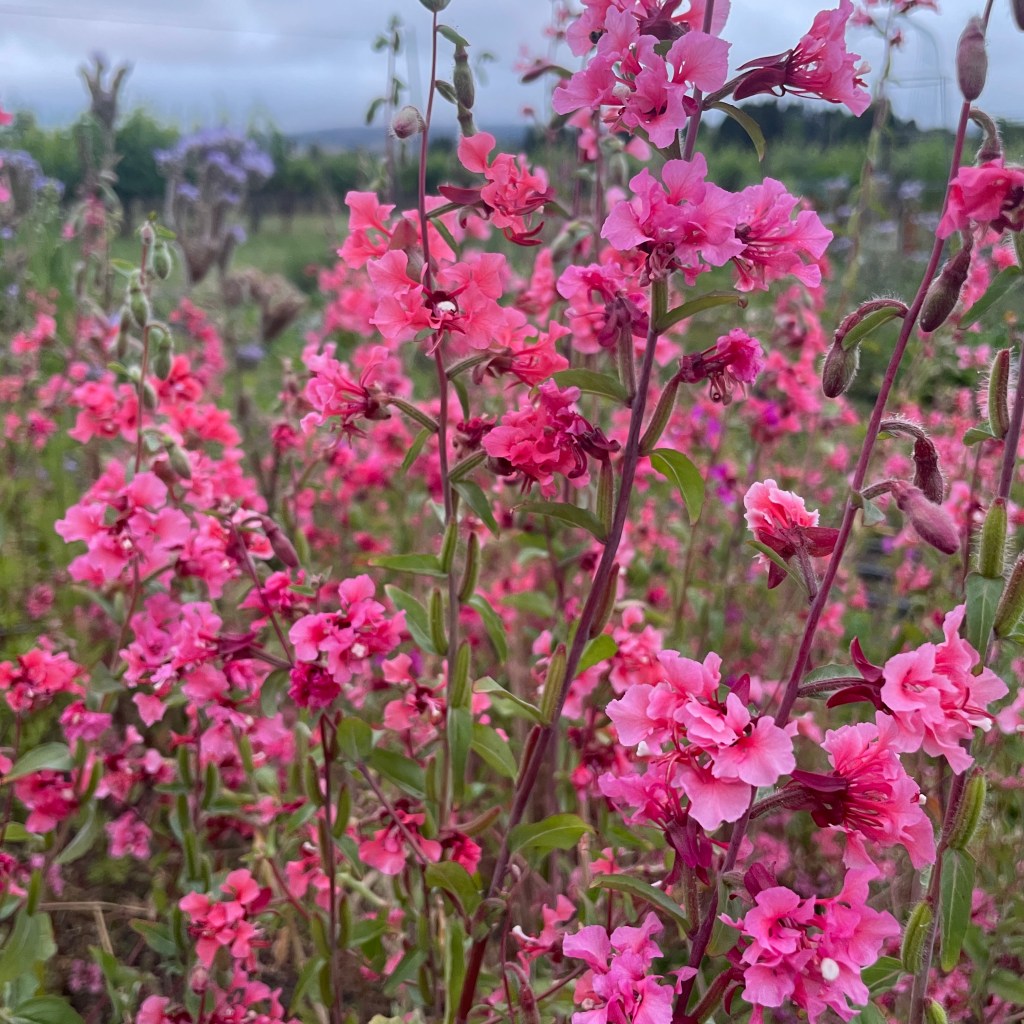
Elegant Clarkia (Clarkia unguiculata): This species of clarkia is a sturdy, shrub-like plant with tall flowering stems. Its ruffly flowers come in single and double forms and in many colors, including salmon, magenta, and white. For maximum vase life, it’s best to cut elegant clarkia when only a couple of flowers at the base of the stem have begun to open. The blooming sequence goes from the bottom to the top, so over the course of the next week, new flowers will continue to bloom up the stem, with the ones at the very bottom eventually falling off.
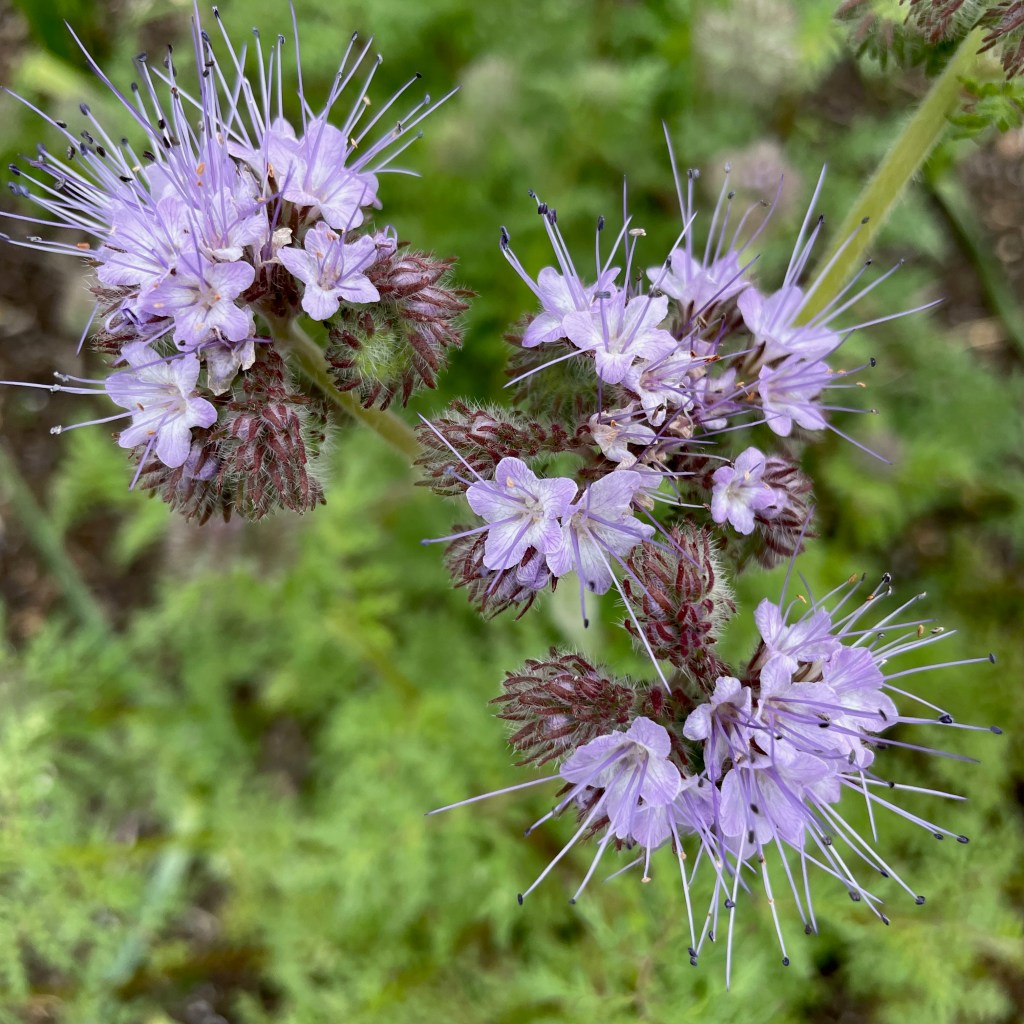
Lacy Phacelia (Phacelia tanacetifolia): Phacelia is sometimes called scorpion flower, because of its curly flower heads with soft little spikes coming out of them. They have a long vase life if they’re cut when only a few of the lavender-colored blooms on each flower head have opened. The flowers also have a light scent that reminds me of grape-flavored candies. Phacelia is often used as an agricultural cover crop, because it sprouts and grows so readily, as long as it’s sown into cool soil. For cover cropping, it’s often cut down before it sets seed, but if you let the flowers open, they’ll be visited by many pollinators, hence another of its nicknames: Bee’s Friend.
 Local flowers from St. Helena, CA