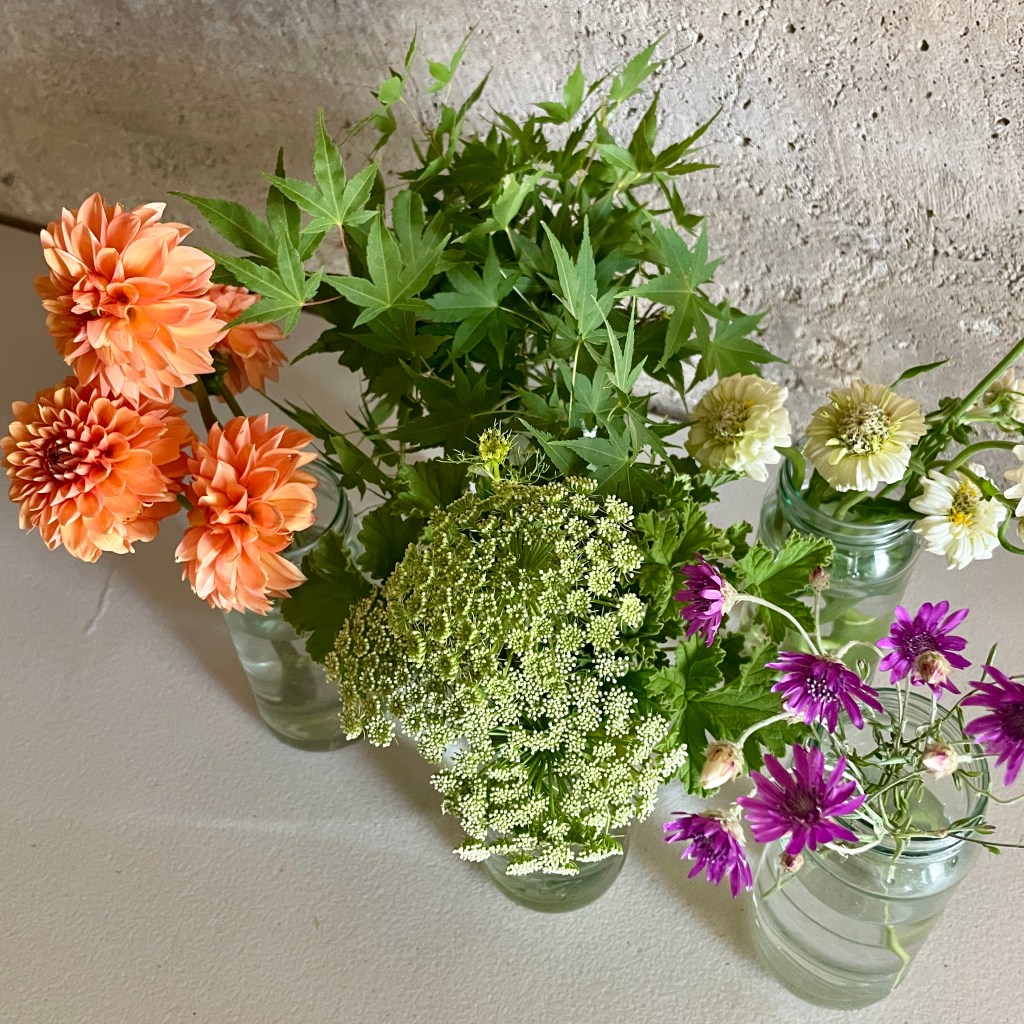
When putting together flowers, the steps I follow and the proportion of stem categories vary a bit, depending on what I’m creating: a market bouquet, a bowl centerpiece, a gift vase…
But the stem categories themselves are similar in any situation, so I’ve put together a list of these below. Check out each category for an image and some examples of plants that can be used in the summer. Then read on for tips on how to use these elements in different formats.
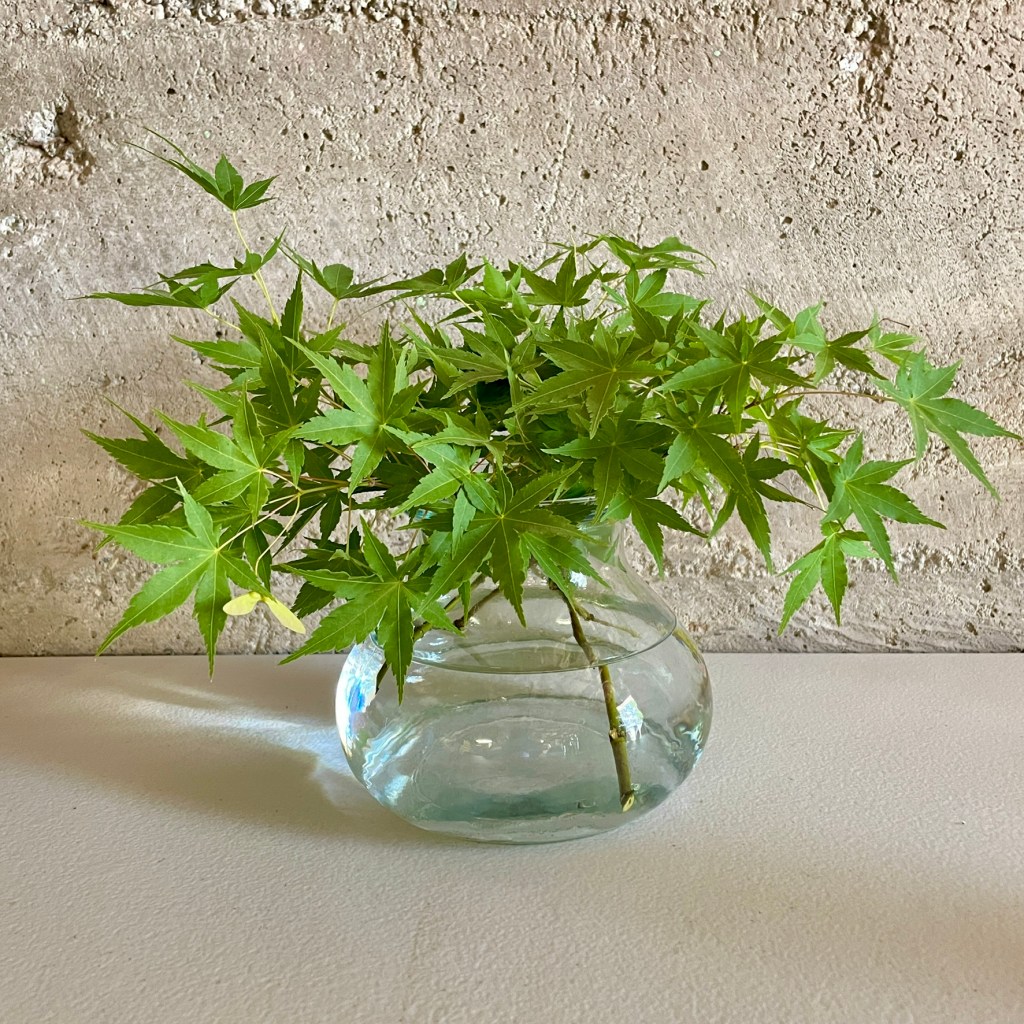
Framework: woody foliage stems that ideally aren’t completely straight, such as maple, ninebark, oak, or viburnum
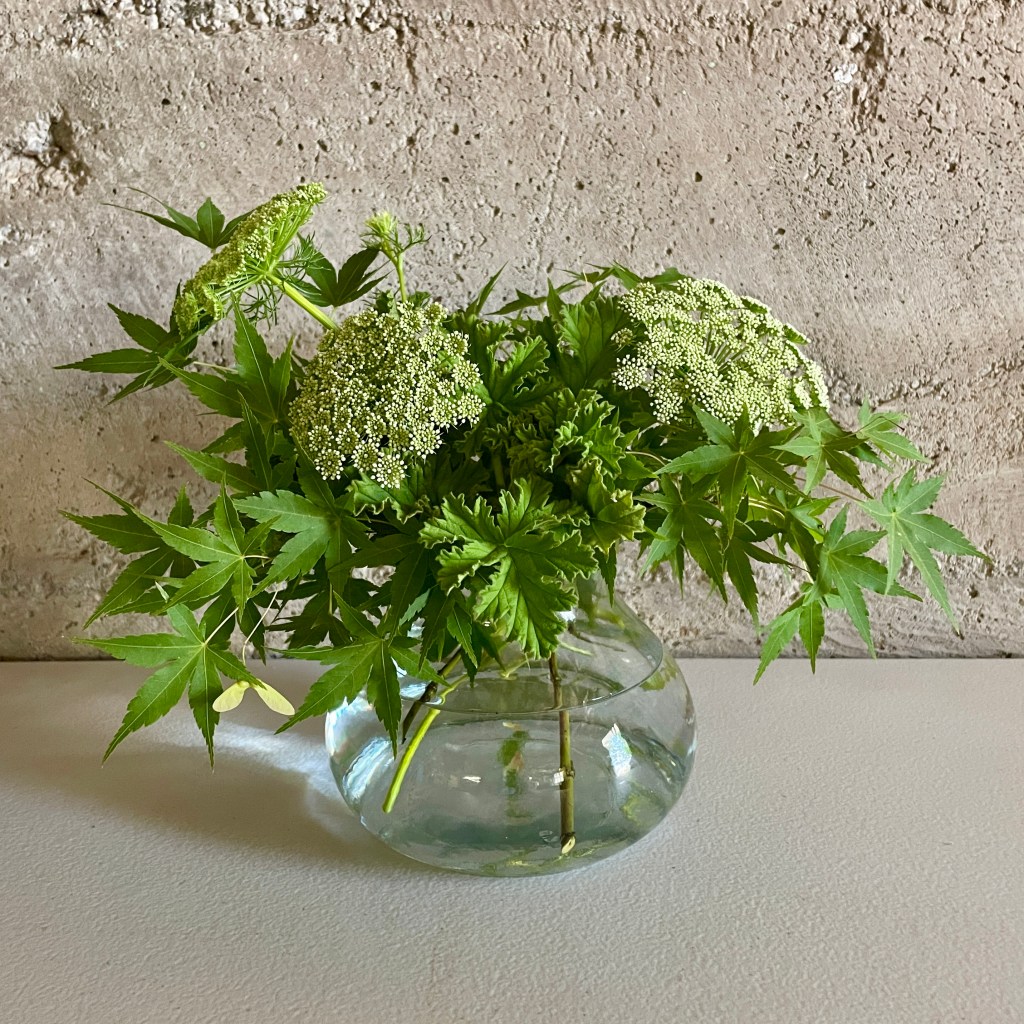
Filler: stems that fill empty spaces with their foliage, berries, or clusters of little flowers, such as ammi, ornamental basil, scented geraniums, mint, statice, and yarrow
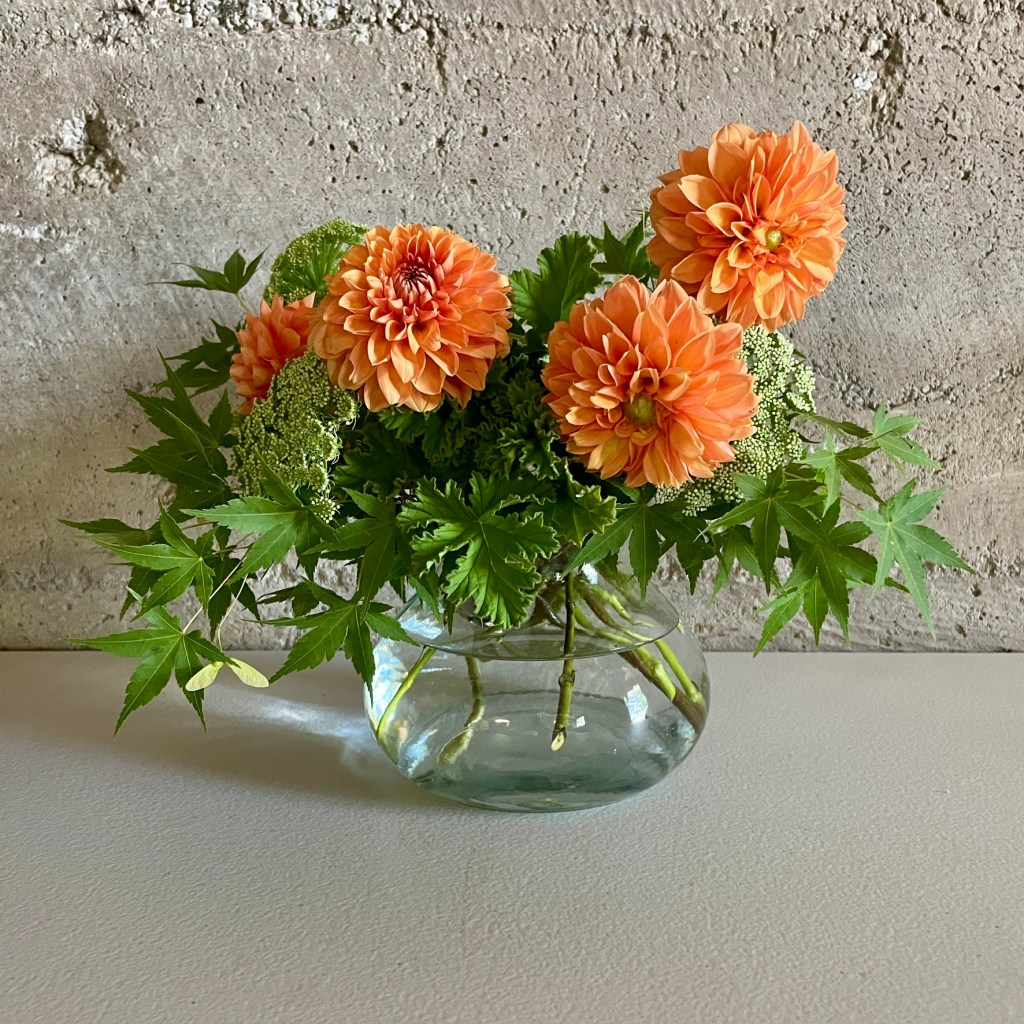
Focal Flowers: large flowers that are often fairly round in shape, such as dahlias, echinacea, roses, sunflowers, or big zinnias
Supporting Flowers: stems with smaller flowers that echo the focal flowers, such as gomphrena, pincushion flowers, strawflowers, and small zinnias
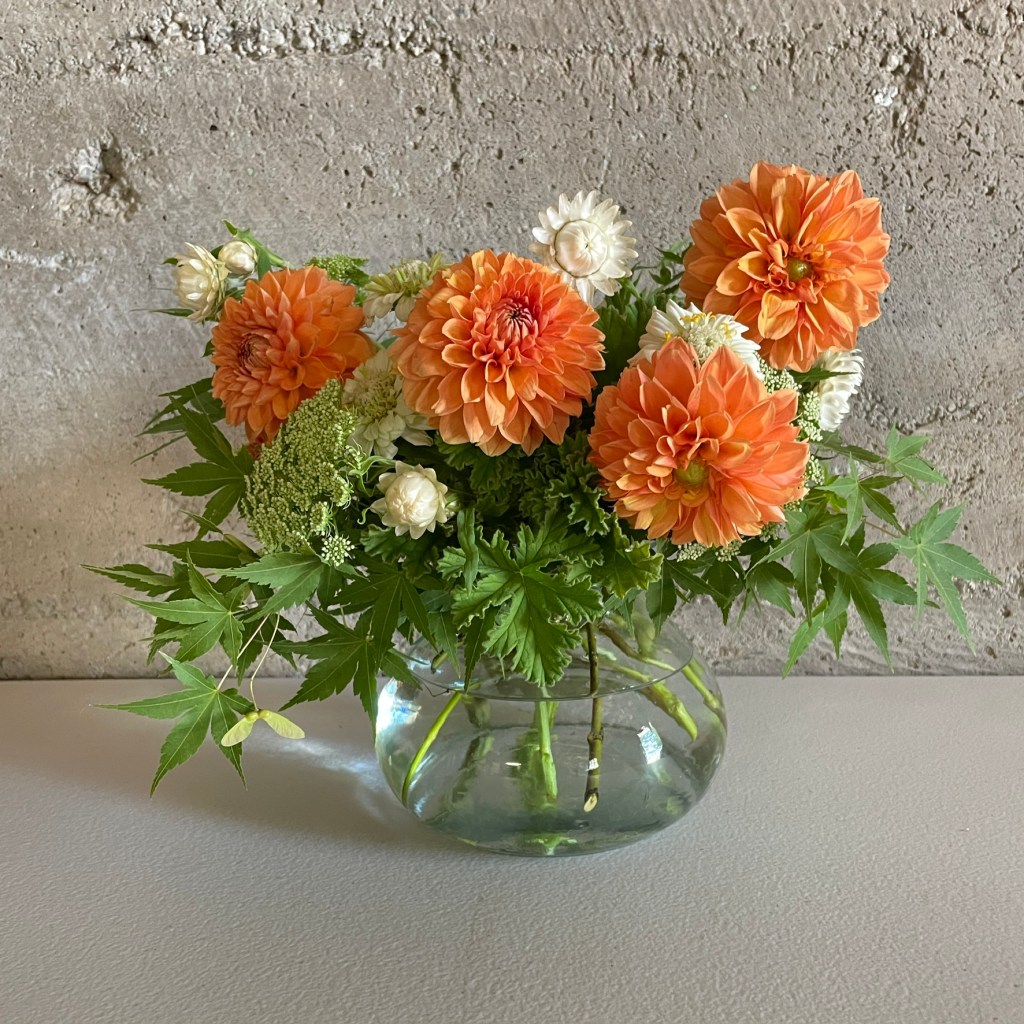
Final Flourish: stems that add airiness and/or movement to an arrangement because they have delicate flowers or a graceful, trailing growth habit, such as honeysuckle, northern sea oats, and xeranthemum.
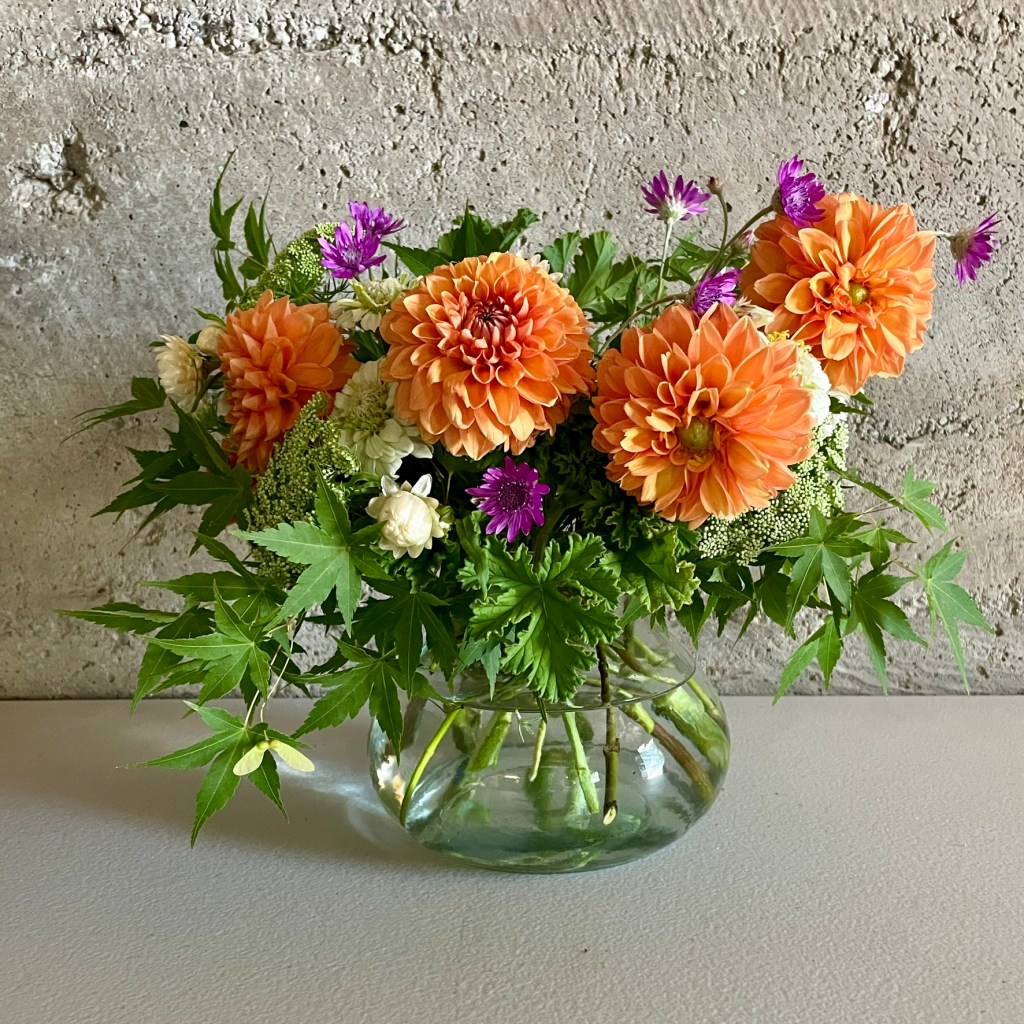
As you can see in the photos above, this list goes in the approximate order that I use when building a gift vase or a bowl centerpiece: I start with a few framework stems, and then add on filler to complete a base layer that the round flowers can be nestled into. Next, I add focal flowers and dot the remaining spaces with supporting flowers, checking as I go whether to add any more filler for a completed look. Finally, I add just a few stems of final flourishes to add texture and airiness to the arrangement.
If it’s an arrangement that will be seen on all sides, such as a table centerpiece, I rotate the vessel periodically to ensure that enough of each element is visible from different views.
For a market bouquet that’s not in a vessel, I pull from each category as I build the bouquet in my hand, I omit the framework stems, and I often include a few spike-shaped flower stems, such as snapdragons.
Using this variety of stem types helps create a balanced arrangement, with plenty of texture and visual interest.
Hope you have fun using these categories to build lovely vases of flowers! For more information about putting together flowers, here are some books that informed this article:
A Year in Flowers, by Erin Benzakein
The Flower Workshop, by Ariella Chezar
The Flower Book, by Rachel Siegfried
 Local flowers from St. Helena, CA