
Herbs and scented-leaf geraniums are some of my favorite plants to grow for bouquet foliage. Their soft leaves bring a subtle, refreshing scent and make arrangements feel like they’ve just come from the garden. Several of the plants I use for bouquets also taste great in tisanes (herbal teas). Here are the plants that I grow for both of these purposes:
- Rose Scented Geranium (Pelargonium graveolens ‘Attar of Roses’)
- Spearmint (Mentha spicata) and Peppermint (Mentha x piperita)
- Lemon Balm (Melissa officinalis)
- Anise hyssop (Agastache foeniculum)
- Lemon Basil (Ocimum basilicum var. citriodora ‘Mrs. Burns’ Lemon’)
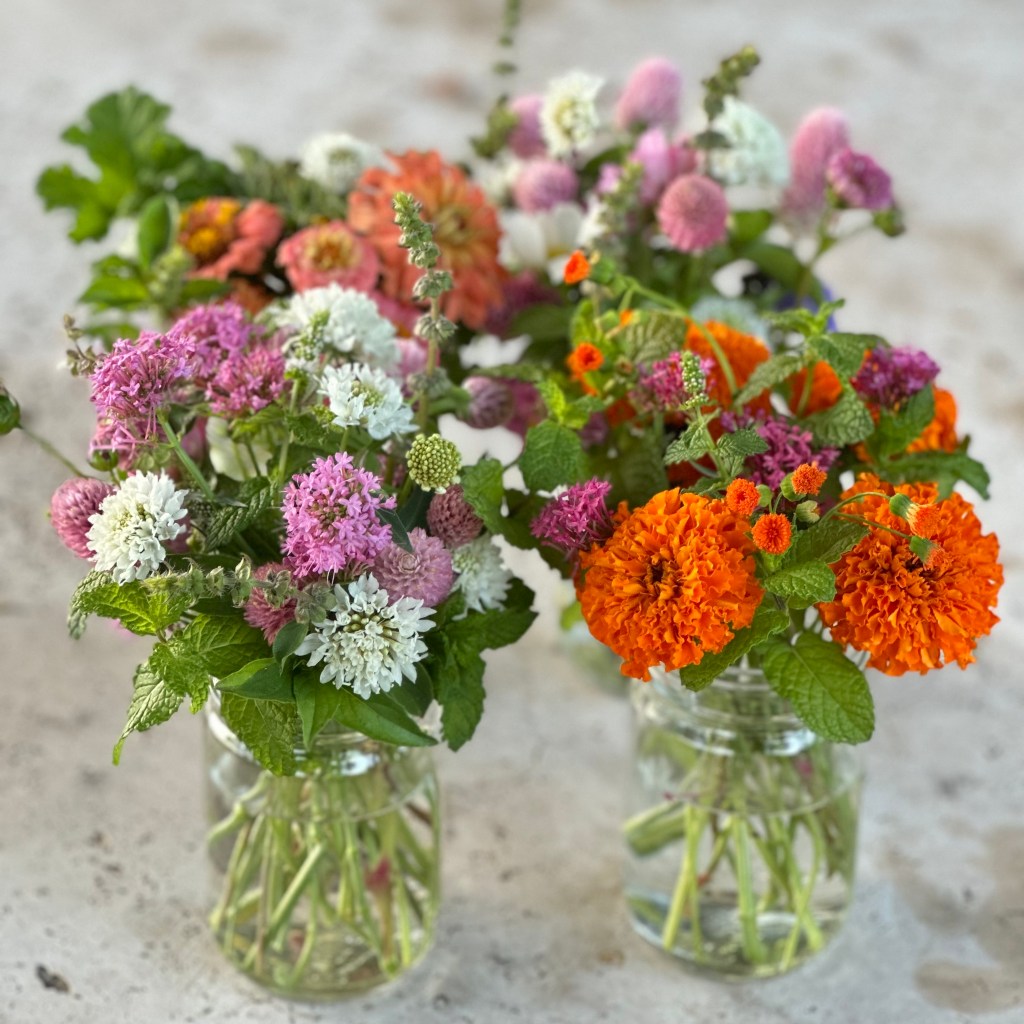
Using Scented Leaves in Bouquets
To use these scented-leaf plants in your flower arrangements in springtime, wait until the stems have firmed up a bit and aren’t soft anymore. It’s tempting to cut them when they first start sending out fresh, green growth, but they’re more likely to droop after cutting if their stems are too new and tender. One trick that some swear by is dipping the bottom inch of the stems in boiling water for a few seconds before letting them rest in cool water. This works for me some of the time, but I find that new spring foliage still can flop even with this treatment.
For the greatest chance of the stems staying upright and sturdy after being cut, it’s also ideal to harvest them early in the morning, or late in the evening if morning isn’t possible. Let the stems rest in water in a cool, dark place for a few hours, and then they should be ready to use for arranging.
Using Scented Leaves for Tisanes (Herbal Teas)
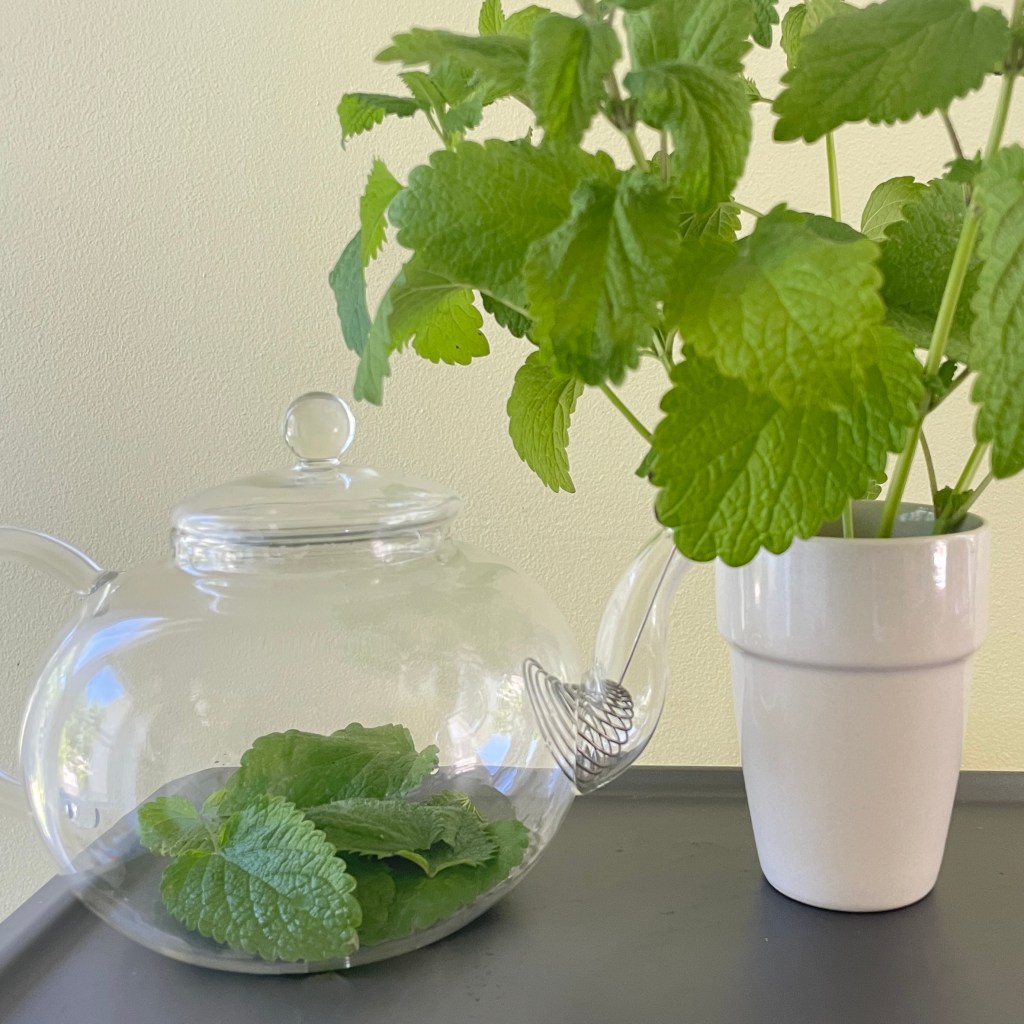
The leaves of the plants listed above also make pleasant, refreshing tisanes, both hot and iced. To make a tisane, after washing the leaves and picking them off of their stems, place them in a teapot and cover them with boiling water, or water that’s a little under the boil.
I find it handy to use a teapot with a spiral spout filter, because you can pile in lots of leaves for good flavor, while still keeping them from slipping into your tea as it’s poured out.
You will want to steep the leaves for several minutes longer than with dried herbs or black tea. Unlike black tea, these fresh herbs don’t have a bitter flavor when steeped for more than a few minutes, so they can remain in the water longer.
Once you start using fresh leaves for tisanes, you can experiment with different combinations, and try adding sugar or honey to see what ways you like them best.
 Local flowers from St. Helena, CA