If you’d like flowers in your garden to cut this summer, April is a great month here for sowing or planting out “cut and come again” flowering plants. They’re especially useful to grow because, if you keep picking their flowers, they’ll continue producing more. Most of them are annuals, so their survival strategy is to produce as many flowers as possible that then go to seed to become next year’s plants. The way to keep the flowers coming is to remove the spent ones, to delay the plant producing seeds.
In our climate zone, all these flowers can typically be planted out by mid-April, after our last frost date. If you’re growing in a different zone, you’ll want to check your last frost date to know when it’s safest to plant out the ones on this list that are frost tender.
Here are a few of my favorites, starting with those that are fast-growing and can easily have their seeds sown directly in the ground. These are followed by some that grow a bit more slowly, which I usually sow indoors and then transplant outside.
Easy to sow seeds directly outside
Zinnias (Zinnia elegans, Zinnia haageana): These classic summer garden favorites come in a wide array of colors and flower sizes.
Favorite Varieties: Benary’s Giant Mix, Oklahoma Mix, Jazzy Mix
Tips: Don’t harvest zinnias the moment they open; use the “wiggle test” instead to see if they’re ready to cut: hold the stem a couple of inches below the flower and wiggle it back and forth gently; if it is stiff and doesn’t move it’s ready to cut, but if it flops from side to side it needs more time to mature. Zinnia elegans can grow tall and may benefit from the support of a stake or horizontal netting, while Zinnia haageana is shorter and won’t require support.
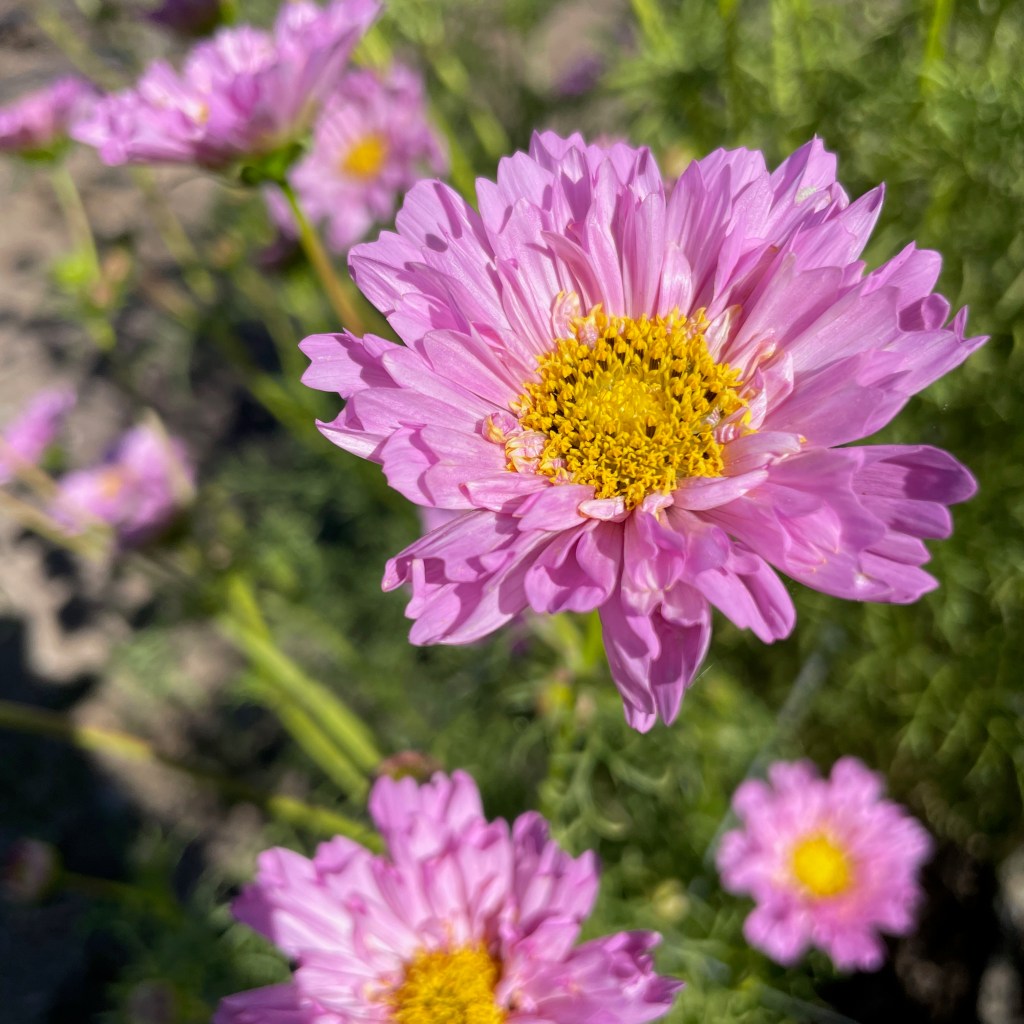
Cosmos (Cosmos bipinnatus): These delicate, daisy-like flowers come in a lovely range of colors, as well as in both single and double petaled forms; all forms of it are visited happily by pollinators. The photo above is Cosmos ‘Double-Click Rose Bonbon’.
Favorite Varieties: Afternoon White, Fizzy White, Sonata Mix, Double-Click Mix
Tips: Taller varieties of cosmos do best with support so they don’t fall over, but more compact varieties like ‘Sonata Mix’ usually don’t need support and are also great for containers. To have blooms that last more than a few days indoors, pick stems just as the flower buds are beginning to crack open.
Mexican Sunflower (Tithonia rotundifolia): These vigorous growers start out as a little seed sprouting in spring and then grow rapidly over summer, so that by early fall they’ve branched out into a giant plant covered in orange or gold blooms that attract many bees and butterflies.
Favorite Varieties: Mexican Torch
Tips: Mexican sunflower tolerates poor soil, and does best in full sun. The flowers can be cut for bouquets when they are mostly open.
Easier to sow seeds indoors and transplant outside
Gomphrena (Gomphrena globosa, Gomphrena haageana): Gomphrena’s cute rounded blooms look a bit like clover blossoms, but unlike clover, its flowers last well in a vase.
Favorite Varieties: Audray Mix, Strawberry Fields
Tips: Gomphrena sends out many branches, and it stays compact enough that it doesn’t need support. The flowers can be picked once the stems start to stiffen up and aren’t floppy, and they make wonderful dried flowers too.
Pincushion Flower (Scabiosa atropurpurea): A short-lived perennial, pincushion flower grows a bit slowly, but it’s adaptable to different conditions, comes in an array of colors, and produces tons of blooms over several months if you keep cutting its flowers.
Favorite Varieties: Snowmaiden, Merlot Red, Black Knight
Tips: Pincushion flower is fairly hardy and can also be planted in our climate zone in the fall to overwinter, blooming the following spring. It grows tall and benefits from support; the blooms last longest when cut just as the first florets around the edges begin to open.
Statice (Limonium sinuatum): Like pincushion flower, this type of statice is a short-lived perennial that grows a bit slowly and produces many flower stems over several months in our climate. Statice’s colorful blooms are actually papery bracts that keep their form and color well when dried, so statice is an excellent plant for dried-flower bouquets.
Favorite Varieties: Forever Happy, Seeker Mix
Tips: Like pincushion flower, statice is fairly hardy and can be planted in our climate zone in the fall to overwinter, blooming the following spring. Stems can be cut when the tiny white or yellow flowers inside the bracts begin to open.
 Local flowers from St. Helena, CA