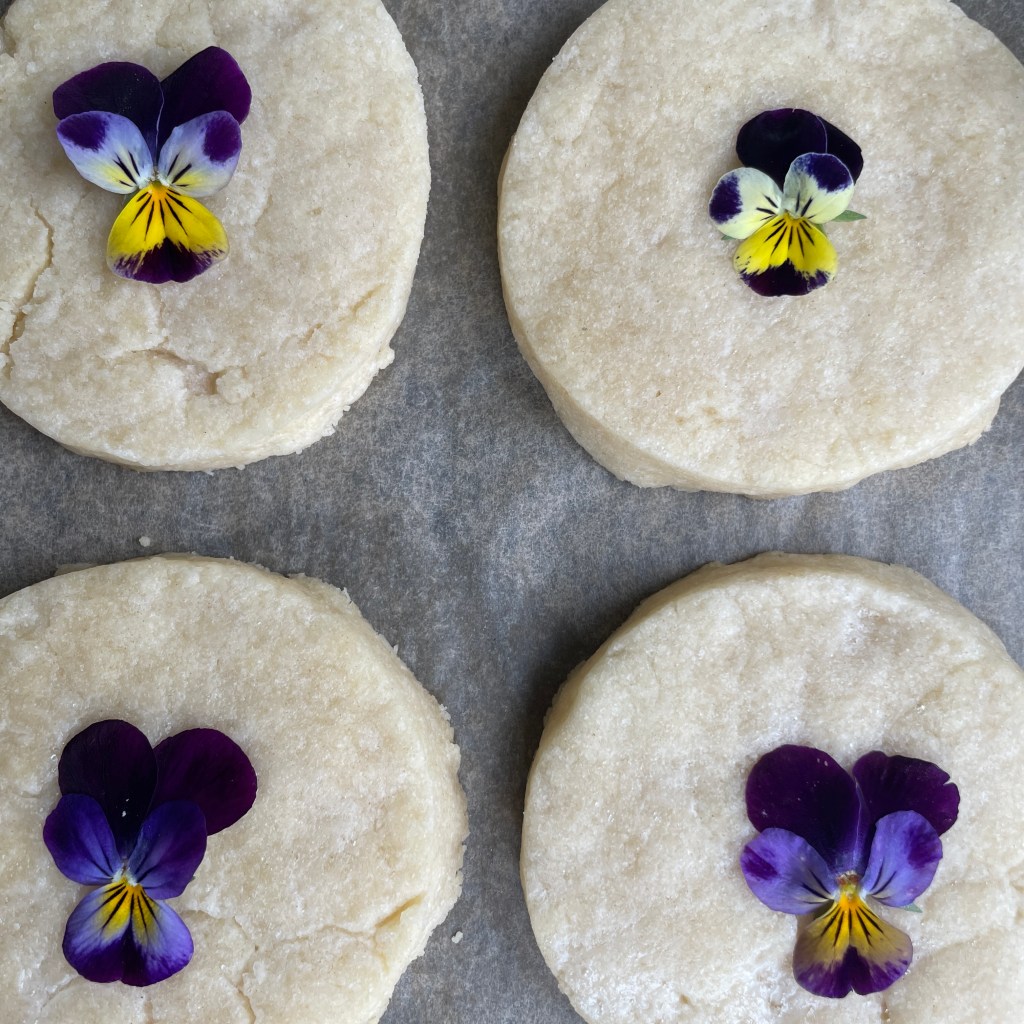
Recently, I’ve enjoyed reading several new cookbooks that are full of ideas for using edible flowers (titles listed down below). Here are some tips I gleaned from these books, to help bring the vibrant colors and delicate flavors of flowers to your kitchen:
Harvesting and Storing (2 Methods)
It’s ideal to harvest edible flowers in the cool of the morning, after any dew on them has dried. If there is dirt on them, they can be rinsed very gently, but they will hold up best if you just shake or brush them off a bit to make sure there are no insects on them. Use edible flowers as soon as you can; an effective way to store them for a day or two is to lay them on a damp paper towel in a container with a lid and place them in the fridge. If I have enough time while harvesting, the method I like best is to cut short stems with flowers, placing them in a jar or cup of water in a spot in the kitchen that’s away from direct sunlight, until I’m ready to use them.
Decorative Garnishing vs. Eating
Some edible flowers, such as calendula, have tasty petals, but their center and the calyx underneath the petals are bitter. When simply decorating a dish, the whole flower can be used, but if eating them you’ll want to use only the petals.
Getting Creative in the Kitchen
My go-to method for using edible flowers is to scatter them on a salad, but if you’d like to go beyond this classic use, there are numerous more unusual possibilities. Violas, for example, look lovely when wrapped up with shrimp and vegetables in a Vietnamese summer roll, or when pressed in paper under a heavy book for just an hour and then placed on baked cookies. (First, with a pastry brush, put egg white diluted with 1 tsp. water on top of the cookies, then put on the flowers and brush again over top of them to keep them in place, then sprinkle with a bit of sugar and bake the cookies for three more minutes.)
Being Resourceful with a Kitchen Garden
When annual and biennial vegetable and herb plants—such as arugula, carrots, cilantro, and dill—“bolt” and begin flowering, their delicate little blooms can be scattered over salads and cooked dishes, or used for pickle recipes. Some perennial herbs, like chives and mint, also bloom with useful edible flowers.
Preserving Floral Aromas
The sweet, familiar scents of elderflower, lilac, and rose can enhance the flavor of beverages and baked goods all year when you use their flowers to make syrups, cordials, jellies, and sugars.
Pressing and Drying
Edible flowers that keep their color well when pressed or dried have great potential for flavoring or decorating dishes even when they’re not in season. Dried petals of calendula and cornflower can be scattered over a cake or rice, or placed onto chocolate disks along with nuts and dried fruit. Dried lavender flowers are delicious baked into shortbread, or as part of a marinade for roast lamb.
For more edible flower information & recipes, here are a few books to check out:
The Edible Flower, by Erin Bunting & Jo Facer
Big Heart Little Stove, by Erin French
Eat Your Flowers, by Loria Stern
 Local flowers from St. Helena, CA